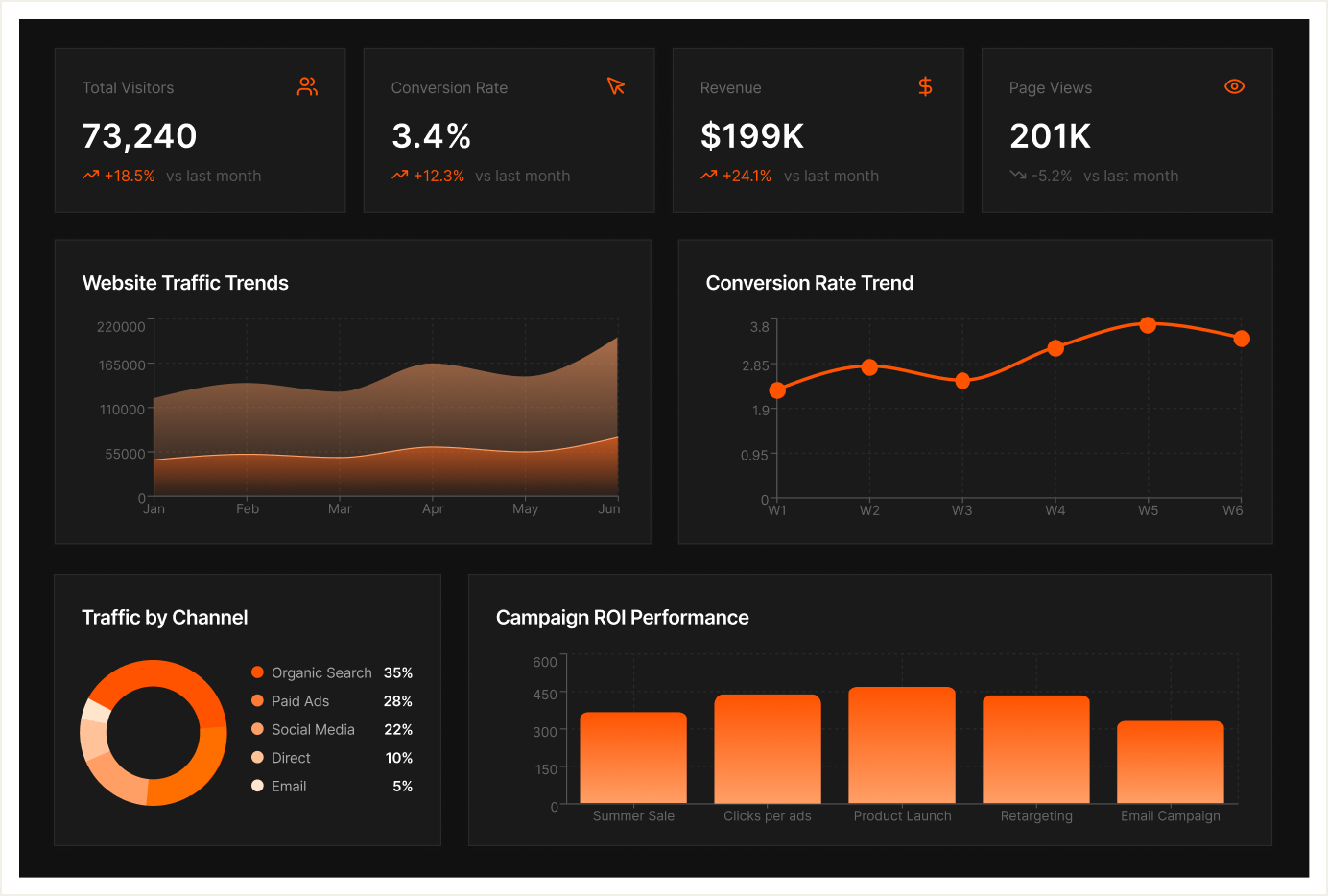
Embedded analytics has become a cornerstone of product strategy for SaaS companies. It's not just about visualizing data—it's about delivering actionable insights exactly where users need them, within the flow of their daily operations. But delivering this vision hinges on how embedded analytics platforms are deployed.
The problem with legacy deployment models
Traditional business intelligence (BI) platforms were designed for centralized, monolithic environments. They relied on manually managed servers or virtual machines, often requiring extensive configuration, rigid infrastructure, and high operational overhead.
These legacy models struggle to meet the demands of modern SaaS environments, especially when it comes to:
- Multi-tenancy: Legacy platforms often lack secure, scalable multi-tenant data management. This forces SaaS providers into brittle workarounds that compromise performance and security.
- Environment management: Migrating content between development, staging, and production environments is cumbersome, slowing down release cycles and increasing risk.
- Scalability and performance: Manual server management limits elasticity, making it difficult to respond to spikes in usage or scale across customer bases.
For SaaS companies, these limitations translate into slower innovation, higher operational costs, and frustrated customers.
The rise of modern deployment technologies
Modern deployment technologies—such as serverless computing, containerization (e.g., Kubernetes), and cloud-native architectures—offer a transformative alternative. These approaches enable embedded analytics platforms to be:
- Scalable: Serverless and containerized deployments can scale automatically based on demand, ensuring consistent performance without manual provisioning.
- Multi-cloud Ready:Platforms can be deployed across multiple clouds (AWS, Azure, GCP), or even within the customer's own cloud environment, aligning with their infrastructure and compliance needs.
- Efficient: Developers can focus on business logic rather than infrastructure, accelerating time-to-market and reducing operational overhead.
These modern deployment technologies also support advanced features like dynamic user hierarchies, API-driven customization, and seamless integration with backend services. For SaaS providers who need to support multi-tenancy, dynamic user hierarchies, and real-time data access, modern deployment technologies are a strategic requirement.
Deployed vs. SaaS-managed embedded analytics: a strategic choice
SaaS-managed platforms may seem convenient at first glance. They're hosted by the vendor, require minimal setup, and promise quick access. But beneath the surface, they come with serious limitations: restricted customization, limited control over infrastructure, and potential compliance risks due to third-party hosting. For SaaS companies that need to scale, differentiate, and meet complex customer requirements, these constraints quickly become roadblocks.
Deployed embedded analytics, on the other hand, puts you in control. You choose where and how the platform runs—whether in your cloud or across multiple environments. This flexibility is essential for multi-cloud and hybrid deployments, security and compliance alignment, deep customization, scalability and performance.
Deployed solutions aren't just more powerful—they're more strategic. They allow SaaS providers to embed analytics as a core product capability, not just a bolt-on feature. That means faster innovation, differentiated analytics experiences, and future-proof for the platforms.
Build for what's next
If you're evaluating embedded analytics for your product, here are a few strategic questions to guide your decision-making:
- 01
Deployment Ownership
Where will my analytics platform be deployed—and who controls it?
- 02
Multi-Tenant Performance
Can I support multi-tenant environments without compromising performance or security?
- 03
Customization Flexibility
How easily can I customize the analytics experience for different user roles or customers?
- 04
Scalable Deployment
Will my deployment model scale as my customer base grows?
- 05
Customer Compliance Alignment
Does my solution align with my customers' compliance and infrastructure requirements?
Modern deployment isn't just about technology—it's about embedding analytics that works for your product, your customers, and your future.
By moving beyond legacy BI models and embracing cloud-native, serverless, and containerized architectures, SaaS companies can deliver analytics that are scalable, secure, and deeply integrated into their products.
To help SaaS leaders like you navigate this decision with confidence, we've created a comprehensive Evaluation Guide—a practical framework for SaaS companies to assess embedded analytics platforms based on real-world needs, including deployment, embedding, self-service, and data management.
Whether you're building your first analytics experience or replacing a legacy solution, this guide will help you ask the right questions and make the right choice.